


Sore, tired eyes at the end of a workday are common enough that most people write them off as part of the job. Hours of close focus do add up, and digital eye strain is usually behind that tired, achy feeling by dinnertime.
You can reduce eye strain by taking regular breaks from close work, blinking more often, keeping your eyes moist with artificial tears, adjusting your screen and lighting, and wearing glasses matched to the distance you work at.
What Eye Strain Feels Like
Eye strain rarely arrives all at once. It builds through the afternoon until you notice you’ve read the same paragraph three times without taking in a word.
Watch for a few of these:
- Dry, gritty, or watery eyes
- Sore, heavy eyelids
- Blurry vision or trouble pulling your focus back after close work
- A headache sitting behind your brows
- Neck and shoulder tension from leaning toward the screen
Sensitivity to bright light often shows up too, especially later in the day.
What Causes Eye Strain
Screens can hold your attention for hours, and many people skip breaks on a busy day. Fine print and needlework ask the same of your eyes. Blinking also slows down when you concentrate hard, which leaves your tear film thinner than it should be by mid-afternoon. Long drives add to it, particularly when harsh glare bounces off wet pavement.
Your surroundings matter more than most people expect:
- Dim lamps or harsh overhead lighting
- Glare from a window sitting behind or in front of your screen
- Air vents and fans blowing toward your face
- Dry indoor air, especially through the heating season
- Glasses or a contact lens prescription that no longer matches your eyes
A small uncorrected prescription can be enough on its own. Your eyes compensate for a mild focusing error all day, and that effort shows up as an ache rather than blurriness.
Quick Ways to Relieve Eye Strain
Small adjustments throughout the day can do more than one long break at the end. Here are some habits you should build:
- Follow the 20-20-20 rule during close work. Every 20 minutes, look at something 20 feet away for 20 seconds.
- Blink deliberately while you’re reading a screen, and let your eyes close all the way each time.
- Use artificial tears a few times a day to keep your eye surface moist.
- Bump up the text size on your phone and laptop so you stop leaning in to read.
- Step outside at lunch, since distance viewing in natural light gives your focusing muscles a rest.
A warm compress over closed eyes for 5 minutes can ease that tight, dry feeling at night. Running a humidifier in the bedroom can help too.
How Long Eye Strain Lasts
Discomfort usually eases once your eyes get rest and moisture back. An evening away from screens is often enough to feel normal by morning.
Symptoms that stretch past a day or two, or come back week after week, point to something rest won’t fix on its own. Book an exam rather than waiting it out.
How to Set Up an Eye-Friendly Workspace
Where your screen sits changes how hard your eyes have to work. Keep it 20 to 26 inches away and slightly below eye level so your gaze angles down.
Match your screen brightness to the light in the room. A bright display in a dim office makes your eyes fight the contrast all day.
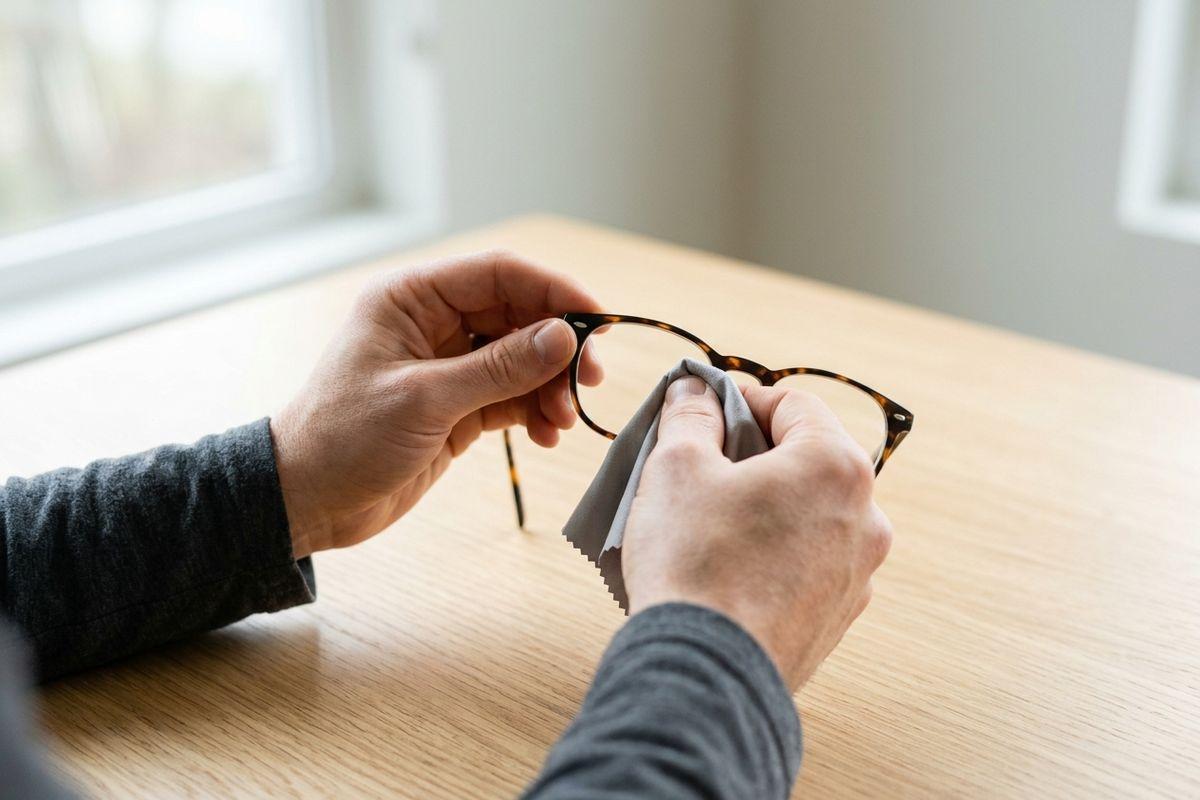
Wipe down your monitor and your lenses while you’re at it, since dust and fingerprints scatter light and soften fine detail.
Angle your desk away from windows or close the blinds partway. Sitting back in your chair helps as well, since a hunched position pulls you toward the screen and shortens your working distance.
Eyewear That Can Help with Eye Strain
Computer and reading glasses are built for a set distance, so your eyes aren’t stretching to reach the screen or the page. If you spend hours at a monitor, ask about lens coatings and tints at your next visit.
An anti-reflective coating cuts the reflections that bounce off the back of your lenses from lamps and windows behind you. For daytime driving, polarized sunglasses can reduce glare from wet roads and other cars.
When to See an Optometrist About Eye Strain
Discomfort that keeps returning is worth an exam, as are headaches that follow you through the week or vision that changes at distances that used to feel sharp.
Your optometrist can check whether your prescription still fits how you use your eyes, along with tear quality and how well your eyes team up at close range.
Dry eye care and full-scope exams are both part of what we offer, along with frames and sunglasses for the whole family.
Get Ahead of Eye Strain
Adjust your setup and give your eyes regular breaks throughout the day, then pay attention to how they feel by evening.
If the discomfort keeps coming back, Precision Eye Care can help you find out what’s behind it. Book an appointment with us and give your eyes the attention they’ve been asking for.