
Key Takeaways
- Myopia and hyperopia are refractive errors and also very common.
- Both conditions are caused by the shape of the eye.
- With myopia, distance vision is blurry while near vision stays clearer.
- With hyperopia, near vision is blurry while distance vision stays clearer.
- Astigmatism is a separate refractive error and can co-occur with both conditions.
The Short Answer on Myopia & Hyperopia
The major difference between the two is simple. Myopia, or nearsightedness, makes distance vision blurry while near vision (like reading a book) remains clear. Hyperopia, or farsightedness, makes close-up objects blurry, while distance vision remains clear. Both are refractive errors, and both are common at any age.
At Precision Eye Care, we see both conditions often. An eye exam can tell us more about what exactly you’re working with.
The Mechanics of Myopia & Hyperopia
Myopia happens when the eye is too long front-to-back. Hyperopia, on the other hand, is caused when the eye is too short. In both cases, the length of the eye causes light to focus incorrectly on the retina, a tissue at the back of the eye that turns light into signals for the brain.
Myopia causes light to focus in front of the eye, which causes blurry distance vision. Hyperopia causes light to focus behind the eye, which causes blurry near vision.
Signs to Watch For
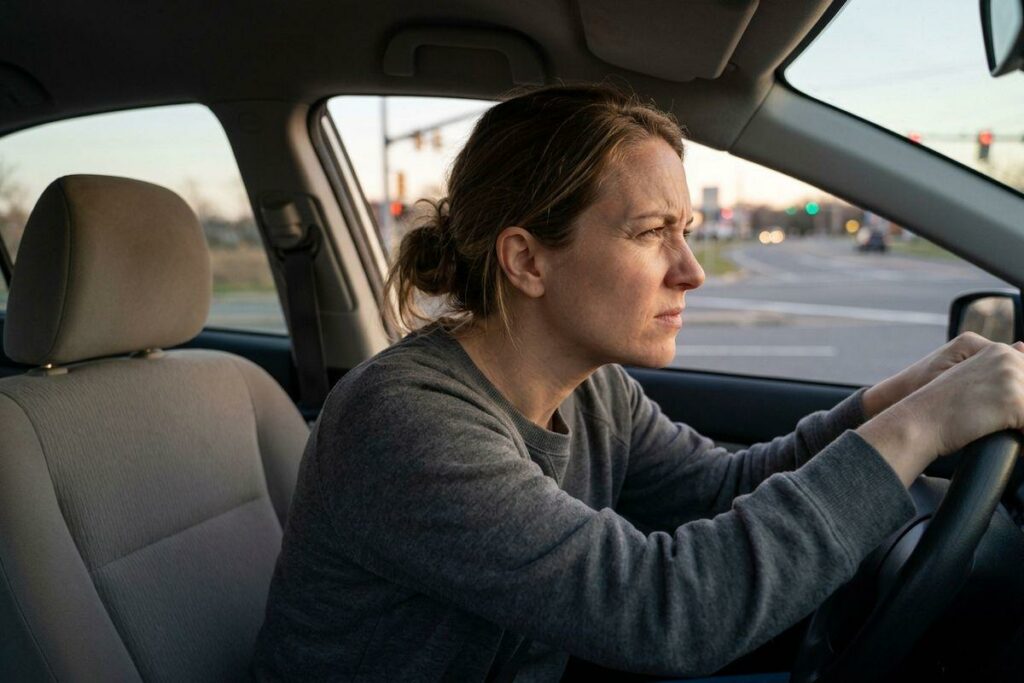
Symptoms tend to show up during the tasks you repeat every day, like driving home at dusk or working through a stack of paperwork.
Common Symptoms of Myopia
- Distant objects look blurry.
- You squint to see things across a room.
- Eye strain and headaches show up after tasks that require distance vision.
- In children, myopia often appears as struggles at school and with schoolwork.
Common Hyperopia Signs
- Close-up objects like words on a page look blurry.
- Your eyes feel tired after close tasks.
- Headaches or eyestrain often follow a long stretch of near work.
- Focusing up close takes effort.
How Each One Shows Up Over Time
Myopia often starts in childhood and then progresses through the teen years. Options for myopia control in children include specialty glasses, contact lenses, and atropine eye drops. Spending time outdoors may also help.
Many kids have mild hyperopia early on, though the problem often resolves over time.
After 40, changes to your near vision are usually related to presbyopia, a separate age-related condition. If you’ve started holding menus at arm’s length, that’s the one to ask your eye doctor about.

How Astigmatism Fits into the Picture
Astigmatism is its own refractive error, separate from myopia and hyperopia. It can co-occur with either one.
With astigmatism, vision is blurry at all distances. If you wear contacts, a contact lens exam can match a lens design to your prescription.
Correction Options & Your Eye Exam in Bridgeport
Everyday Correction Choices
Glasses are a common option for vision correction, and frames can be matched to your face shape and your style, whether you want something understated or something with color. Contact lenses also work for many people, while prescription sunglasses let you keep clear vision on bright afternoons without swapping pairs.
Book Your Next Eye Exam
Dr. Barnes and our team at Precision Eye Care offer full-scope optometry with small-town attentiveness, plus a wide range of frames for glasses and sunglasses.
Schedule your appointment today.