

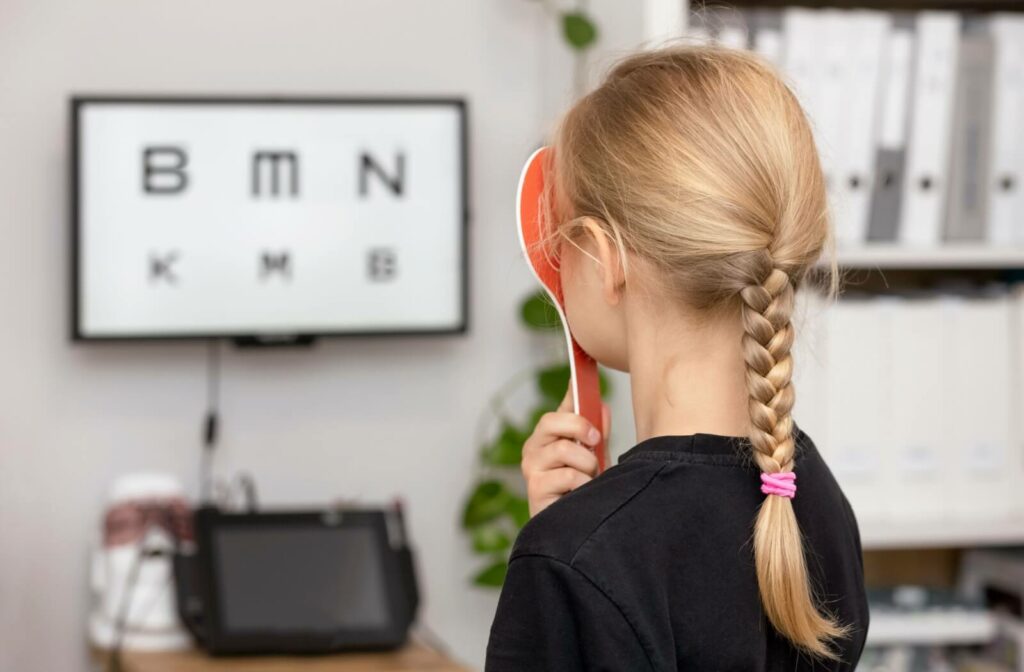
You might know myopia by its more common name: Nearsightedness. It’s the reason you can see your phone screen perfectly, but street signs or the TV across the room look blurry. If you find yourself squinting to read objects far away, our team at Precision Eye Care can help determine if myopia is the reason.
Myopia often develops from a combination of your family history and how you use your eyes every day. Understanding these factors can help you explore myopia control options to better manage your vision needs.
Genetics and Your Environment
The development of myopia is influenced by both genetic factors and daily habits. Both play a role in how your eyes grow and focus light.
An Overview of Myopia
Myopia happens when the eye grows too long from front to back. This causes light to focus in front of the retina (at the back of the eye) instead of on it, making far-away objects look blurry. Because it progresses as the eye grows, myopia is often noticed first in childhood or adolescence, but it can affect adults, too.
Your Family History
If 1 or both of your parents have nearsightedness, your chances of having it are higher. Your genetics can influence the shape of your eyeball and its development.
How You Use Your Eyes
Your everyday activities also make a difference. Spending a lot of time on tasks that require intense close-up focus, like reading or using digital devices, has been associated with an increased risk of developing myopia. This is especially true during childhood and your teenage years, making children’s eye exams important for early detection.
Common Signs of Nearsightedness
Myopia often appears gradually, so you may not notice the changes right away. Pay attention to your vision if you experience symptoms like:
- Difficulty seeing distant objects clearly, such as a presentation screen
- A need to squint or partially close your eyelids to see better
- Headaches related to eyestrain
- Blurry vision when you watch TV or look at something across the room
Does Screen Time Affect Myopia?
You’ve probably heard about the connection between screen time and nearsightedness. Staring at digital screens for hours is a form of “near work” that can lead to digital eye strain. This constant close-up focus may encourage the eye to grow longer over time, a key factor in myopia progression and development.

How to Manage Myopia Progression
While you can’t reverse myopia, you can take simple, proactive steps to manage it. A thoughtful approach to your eye health can make a significant difference in your daily comfort and vision.
Spend More Time Outside
Spending more time outdoors, especially in natural sunlight, has been associated with supporting healthy eye growth. The bright, natural light may help reduce the risk of myopia developing, particularly for children and teenagers.
Give Your Eyes a Break
When you’re doing near work or looking at a screen, remember the 20-20-20 rule. Every 20 minutes, take a 20-second break to look at something that is at least 20 feet away. This simple habit helps your eye muscles relax and reduces strain.
Schedule Regular Eye Exams
Having your vision checked regularly is 1 of the most important things you can do. A comprehensive eye exam with an eye doctor in Bridgeport can help detect myopia early. Our team can track changes in your vision and discuss corrective options that fit your lifestyle, from eyeglasses to specialty contact lenses.
Myopia Questions People Often Ask
It’s normal to have questions about your vision. Here are a few common topics that come up when discussing nearsightedness.
At What Age Does Myopia Develop?
Myopia most often begins in childhood, usually between the ages of 6 and 14. Your vision may continue to change throughout your teenage years as your eyes grow and develop, making it helpful to understand how myopia progresses with age.
Why Is Myopia So Common Now?
Modern lifestyles seem to play a role in the increasing number of myopia cases. People now spend more time indoors doing near-focused activities with computers and phones. This shift away from time spent outdoors is thought to be a factor in why myopia is more widespread today.
Schedule Your Eye Exam
Our team at Precision Eye Care provides routine eye exams and trend-setting eyewear with a welcoming touch that will make you and your family feel at home. Book an appointment in Bridgeport, West Virginia, today to prioritize your eye health.